Picture a sale you've just made. The price is set, the customer has paid, the order is on its way. Now the real question: how much of that money actually stayed with you?
Plenty of businesses go years without asking. Sales come in, the numbers on the screen keep climbing, everything looks fine. But when you sit down at the end of the month and do the math, the picture is often different from what you expected. Because selling on a marketplace carries a hidden cost, and that cost grows a little with every order.
What's Left of a $1,000 Sale?
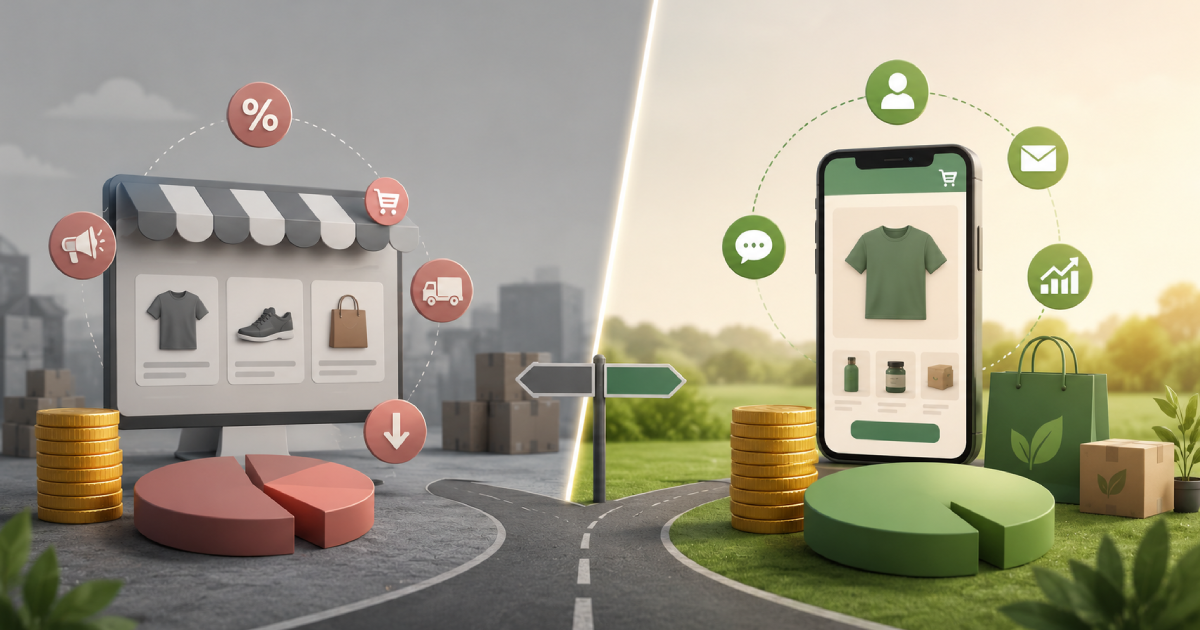
Say you sold a product for $1,000. First the platform's commission comes off the top. Then there's the cost of the ad you ran to push that product up the listings. Add shipping contributions and the “you must join the discount” pressure on campaign days, and the amount that reaches you ends up well below the figure you saw at the start.
On a single sale, that gap might not catch your eye. But spread it across hundreds or thousands of orders and the whole thing changes character. In businesses working on thin margins especially, marketplace commissions can eventually turn into a strange kind of equation: the more you sell, the less you seem to earn.
You Never Even See the Most Valuable Thing: the Customer Data
At least a commission is a visible expense. You see it, you calculate it, you wince — but you know about it. The loss that really goes unnoticed sits somewhere else: the customer themselves.
You can take hundreds of orders through a marketplace and still have no way to reach those customers — no phone number, no email, most of the time. You can't message a happy buyer later to tell them about a new product. Even if that person loved what you make, they're really the platform's customer, not yours.
And that's the most insidious problem over the long run. What grows a business isn't the one-off sale — it's the returning customer. As long as you don't know who you're talking to, building customer loyalty becomes nearly impossible.
What Changes When You Sell From Your Own Website?
The moment you have your own website and mobile app, the equation is rebuilt from scratch. No commission comes off the sale, which means $1,000 actually stays as $1,000 in your business. But the real point is bigger than the money.
The customer is now your customer. You hold their contact details, their order history, the knowledge of which product they buy and how often. On that basis you can run campaigns, send coupons, say “the product you bought last month is probably running low — here's the new batch.” Your brand gets a little more recognized with every order, because the customer is buying from a place with your name on it, not a platform's.
The operations side gets easier too. Your website, your mobile app, your social-media shopping links and the QR codes on your products all connect to a single point. Orders, stock and customer information are managed from the same panel. The headache of checking several places separately disappears.
How Does a Commission-Free Model Reach the Customer?
There's nothing complicated here. The customer orders from wherever they find you: your website, your mobile app, a link on Instagram, or by scanning the QR code on the product itself. Whichever channel they come through, the order lands in the same place, and product and stock information stays consistent everywhere. For anyone who wants to sell in more than one language, the infrastructure is built to handle that too.
Who Does This Model Actually Help?
You can give a generic answer, but the real difference shows up in businesses that have a story behind what they make or sell. A delicatessen working from its own recipe, a producer trying to carry regional flavors to the big cities, a woman entrepreneur whose kitchen-table start turned into a brand, a co-op producing collectively, boutiques, gift shops, cosmetics and organic-product makers… In short, anyone who wants to make their own name known alongside the sale.
The common thread is this: for these businesses, a customer isn't just an order number. Being able to reach them directly is worth as much as the sale itself.
I'm Not Telling You to Quit Marketplaces
Don't get me wrong — marketplaces aren't a bad thing. They're still one of the fastest ways to reach new customers. As a storefront, they work.
The issue is tying all of your sales to a single platform. Because the day that platform changes its rules, raises its commission, or pushes you down from the top spots, you're in trouble if you don't have a plan B. Using a marketplace as a tool is one thing; handing it your entire business is another.
The healthiest approach is to run both side by side: the marketplace to meet new people, your own channel to turn those people into lasting customers.
In Short
New-generation retail isn't really a complicated idea. At its core there's a single thought: build a direct relationship with the customer, with no middleman in between. Easing the commission burden is a nice side effect of that — but it isn't the only reason. The real gain is being able to manage the relationship behind what you sell yourself.
In today's competition, selling a product isn't enough on its own. Being able to build a bond with the customer, and keep that bond alive, is every bit as decisive as the sale.
KZ Perakende exists for exactly this: your own website, your own mobile app, your own customer data, and a single panel to manage all of it. The customer, the brand and the earnings all stay with you.
If you're ready to move to commission-free selling, taking the first step is easier than it looks. Get started today.