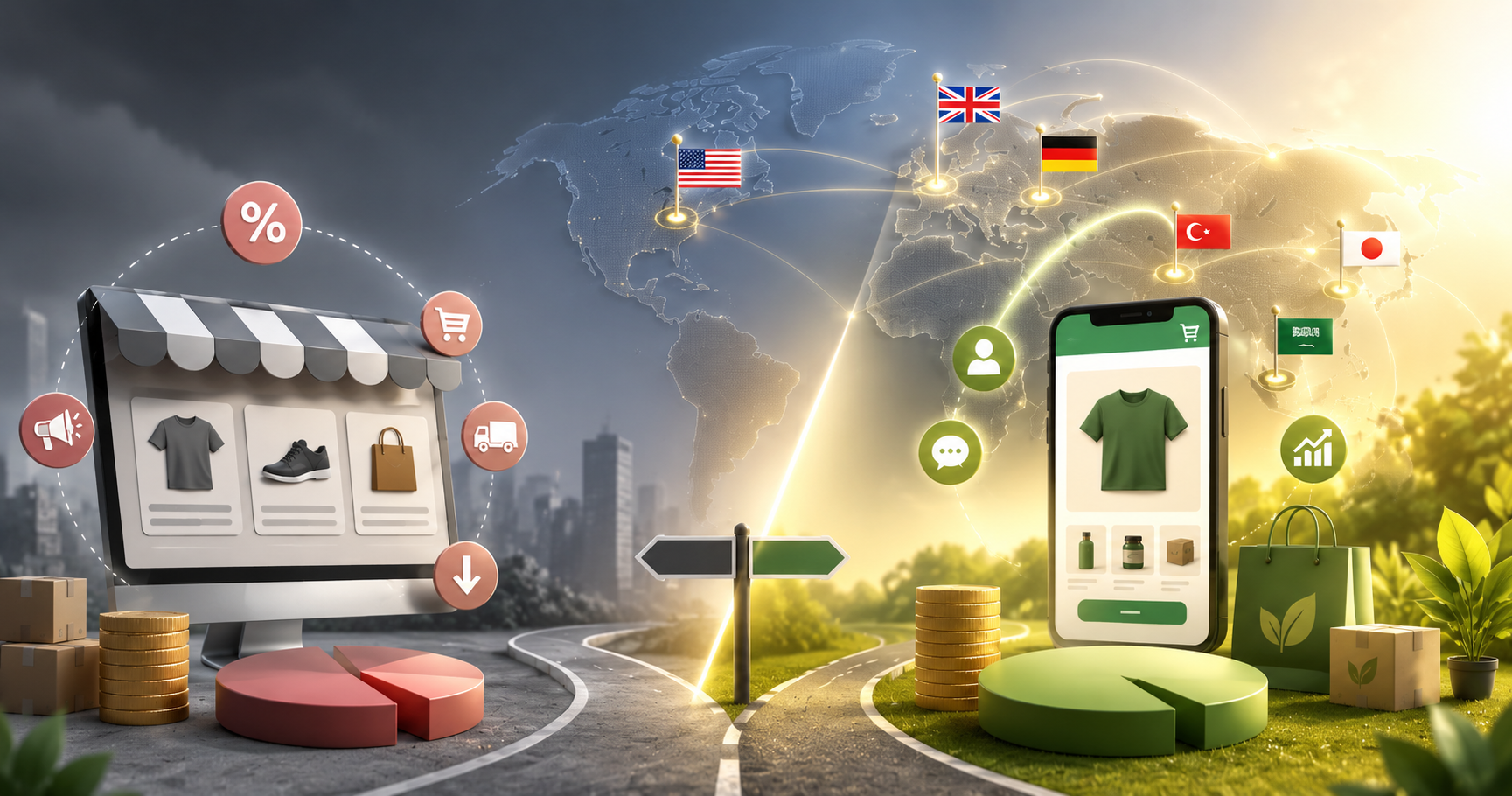
Translating your website into 8 languages doesn't mean you'll sell in 8 countries.
When a business decides to expand abroad, the first move is usually to translate the website into a few languages. English, German, French, Arabic — and just like that, the site is "multilingual" and the orders are expected to start rolling in. But more often than not, they don't. Because selling internationally takes more than translation. The real work is localization.
Translation and localization aren't the same thing
Translation moves words from one language to another. Localization reshapes a product, service, or digital experience to fit the culture, habits, and expectations of the target country. In other words, translation changes the language; localization changes the experience. That's exactly why the world's most successful digital brands don't just translate their text — they design a separate experience for each market.
The same word can mean different things in different countries
Making a user feel at home isn't only about showing them their own language; the details they run into also have to feel familiar. The currency needs to display correctly, the date format has to match local conventions, units of measurement should be converted to local standards, the tone of address has to fit the culture, promotions need to reflect local shopping habits, and the imagery shouldn't feel foreign to the audience. Most users never consciously notice these things. But the moment even one of them is off, their sense of trust takes a hit.
For restaurants, it matters even more
Think about a restaurant menu. Run it through Google Translate and a dish like "İçli Köfte" usually gets translated word for word — yet a foreign diner still has no idea what it actually is. Localization doesn't just swap the name. It explains what the dish is, lists what's in it, describes how it's prepared, and presents allergen information the way the target country expects to see it. That way the customer doesn't just read the menu — they understand it. And that's usually where the decision to order begins.
In e-commerce, localization directly affects sales
Translating a product description as-is is rarely enough, because every country wants something different from the same product. In one market quality leads the conversation; in another it's speed, in another the warranty, and in another sustainability that proves decisive. Successful brands don't describe the same product with the same sentences everywhere — they reposition it around what each market actually cares about.
How AI is changing the process
Producing separate content for every language used to be both expensive and slow. Today, AI makes far more than translation possible: building culturally appropriate copy, using local expressions, rewriting product descriptions from scratch, producing SEO-friendly content, and developing a distinct narrative for each market — all of it faster and more efficient. The crucial point, though, is not to treat AI as nothing more than a "translation tool." The right approach is to see it as a localization assistant.
How we approach it at KobiZeka
With the AI solutions we build at KobiZeka, the goal isn't simply to generate multilingual content. It's to localize your products, restaurant menus, services, website, and digital content so they genuinely fit the target market. Because we know that people don't buy words — they buy an experience that speaks to them.
The bottom line
For any business looking to grow globally, the first step isn't duplicating content across languages. The real goal is to give every customer an experience that feels natural, clear, and trustworthy — as if they were shopping in their own country. The technology that will set companies apart in the digital world ahead won't be the one that merely translates, but the one that localizes. Because translation transfers information, while localization builds trust. And sales tend to begin right where that trust does.